Best Dog Collar (2026): Everyday Nylon vs Martingale Picks
The best dog collar is the one that stays on, holds tags, and matches how you walk. Start with a solid nylon everyday collar, then step up to a martingale if your dog backs out of buckles.
By Alex Turner
Pawsidepicks is reader-supported. As an Amazon Associate we earn from qualifying purchases. Learn more.
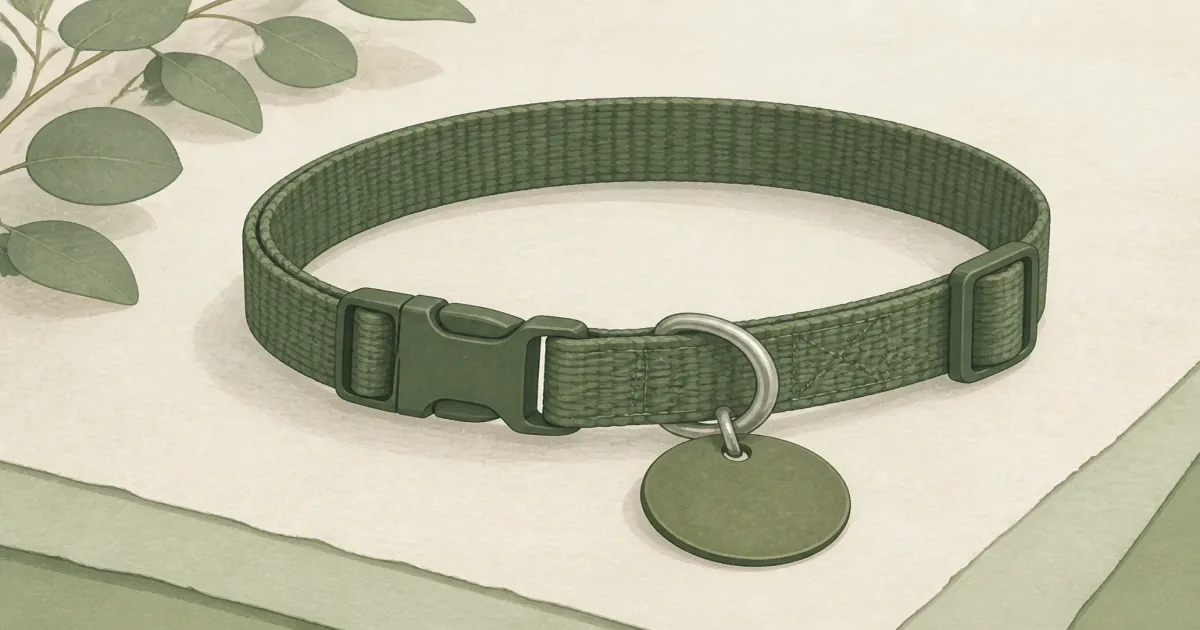
The short answer: For everyday tags and short leash clips, buy the Blueberry Pet Essentials Medium Dog Collar in Flint Gray (paid link). If your dog backs out of flat buckles, step up to the Ruffwear, Web Reaction Martingale Dog Collar (paid link). For muddy training and lake days, use the Biothane martingale (paid link) that rinses clean.
Our picks
A collar has one boring job: stay on and hold identification. Fashion prints do not matter if the buckle opens on a squirrel chase. Match the collar to the escape risk and the weather you actually walk in, then attach tags you can read from a phone flashlight.
Pair a solid collar with a no-pull harness when walks need more chest control, and keep a short fixed leash for training instead of relying only on a retractable leash. Car rides still need a seat belt tether clipped to something that will not snap.
Flat nylon vs martingale vs waterproof
Flat nylon wins for most apartment dogs that do not slip collars. Martingales win when the dog has a narrow head or a talent for backing out. Coated Biothane wins when fabric stays damp and starts to smell after every rain walk.
Top pick: Blueberry Pet Essentials nylon
The Blueberry Pet Essentials Medium Dog Collar in Flint Gray (paid link) is the default best dog collar for daily wear. High-density nylon, a quick-release buckle, and a chrome D-ring cover tags plus a short leash clip without drama. Owners keep buying this line because sizing and colors are predictable, and the webbing holds adjustment instead of creeping loose after a week.
Measure the neck and leave two fingers of space. Wipe the collar after muddy walks. Skip this style if your dog routinely backs out of flat collars, or if you need a limited-cinch loop for leash work.
Escape-proof pick: Ruffwear Web Reaction martingale
The Ruffwear, Web Reaction Martingale Dog Collar (paid link) is the step-up when escape is the real problem. The limited-cinch loop tightens enough to stop a reverse slip, then relaxes when the leash goes slack. Reflective Tubelok webbing helps dawn and dusk walks. The side-release buckle makes on/off easier than classic slip-only martingales, and the separate ID point with a tag silencer keeps jingling down.
Size carefully. A martingale that is too large never engages. A martingale that is too small feels like a constant squeeze. Use this for on-leash walking and training, not as a tie-out collar.
Waterproof pick: Biothane martingale
The Martingale Collar for Dogs, Biothane, Stainless Steel Hardware (paid link) is the pick when fabric collars stay wet and sour. Biothane wipes clean after lakes and rain. Stainless hardware resists the rust that cheap chrome shows after a season of beach walks. The limited-cinch design still helps with leash communication for pullers and slip artists.
The hand-feel is stiffer than soft nylon at first. That is normal for coated webbing. Skip it if you want a plush everyday fashion collar and rarely get wet.
Fit, tags, and hardware that actually matter
Measure the neck where the collar sits, not the widest part of the chest. Check the size chart for width as well as length. A half-inch collar on a large dog looks cute and then rolls. A 1-inch collar on a tiny dog digs in.
Mount tags on a split ring that does not open under load. Keep microchip registration current even if the collar is perfect. Buckles and D-rings fail occasionally. Identification should not depend on one plastic latch.
When a harness should take the leash
Collars are poor tools for hard lunging. If your dog hits the end of the leash and coughs, move the leash clip to a front-clip harness and keep the collar for ID only. Puppies learning manners often do better with harness pressure distributed across the chest.
Never use a flat collar as a tow strap for a bike, scooter, or car. That is how necks get injured.
Rain, mud, and smell
Fabric collars absorb water and hold odor. If you hike wet trails, either rinse and dry nylon every time or switch to Biothane for those days. A dog raincoat keeps the dog drier, but the collar still sits against wet fur. Plan cleaning the same way you plan baths.
Need season-long flea and tick coverage on the neck? That is a different product than everyday nylon. See best flea collar for dogs when prevention is the job and tags stay on a separate ID collar.
Bottom line
Buy the Blueberry Pet Essentials Medium Dog Collar for everyday tags. Choose the Ruffwear Web Reaction when escape is the failure mode. Choose the Biothane martingale when wet work ruins fabric. Fit with two fingers of space, keep tags readable, and move hard pulling to a harness instead of cranking a collar tighter.
Frequently Asked Questions
What is the best dog collar for most homes?
Start with the Blueberry Pet Essentials Medium Dog Collar in Flint Gray for daily tags and short leash clips. Move to the Ruffwear Web Reaction Martingale if your dog backs out of flat collars. Choose the Biothane martingale when mud and water ruin fabric fast.
Collar or harness for walks?
Use a collar for ID tags and calm leash manners. Use a no-pull harness when the dog lunges hard or has a sensitive neck. Many owners keep both and clip the leash to the harness on busy streets.
How tight should a dog collar be?
You should fit two fingers between collar and neck. Too loose invites escape. Too tight leaves marks and makes tags dig in.
What is a martingale collar?
A martingale has a limited loop that tightens slightly when the dog pulls or backs up, then relaxes when the leash goes slack. It is popular for sighthounds and escape artists.
Do puppies need a different collar?
Buy a lightweight nylon they will outgrow, check fit weekly, and keep tags current. Soft webbing beats heavy hardware on small necks.
Can I leave a collar on in a crate?
Many trainers remove buckles in crates to avoid catching on wires. If you leave one on, use a breakaway design only when your dog is supervised and not climbing crate bars.
When should I replace a dog collar?
Replace it when stitching frays, the buckle cracks, or the adjustment slips under load. Sun-faded webbing is a warning, not a style choice.
Are GPS or smart collars worth it?
Trackers help roaming dogs, but they are heavier and need charging. Keep a simple nylon or martingale as the always-on ID layer even if you add a tracker.