Best Deshedding Brush for Dogs (2026): Undercoat Tool vs Slicker
The best deshedding brush for dogs depends on the coat. Use an undercoat blade on double coats. Use a slicker for surface hair and light mats. Dry coat only, short sessions.
By Harper Lin
Pawsidepicks is reader-supported. As an Amazon Associate we earn from qualifying purchases. Learn more.
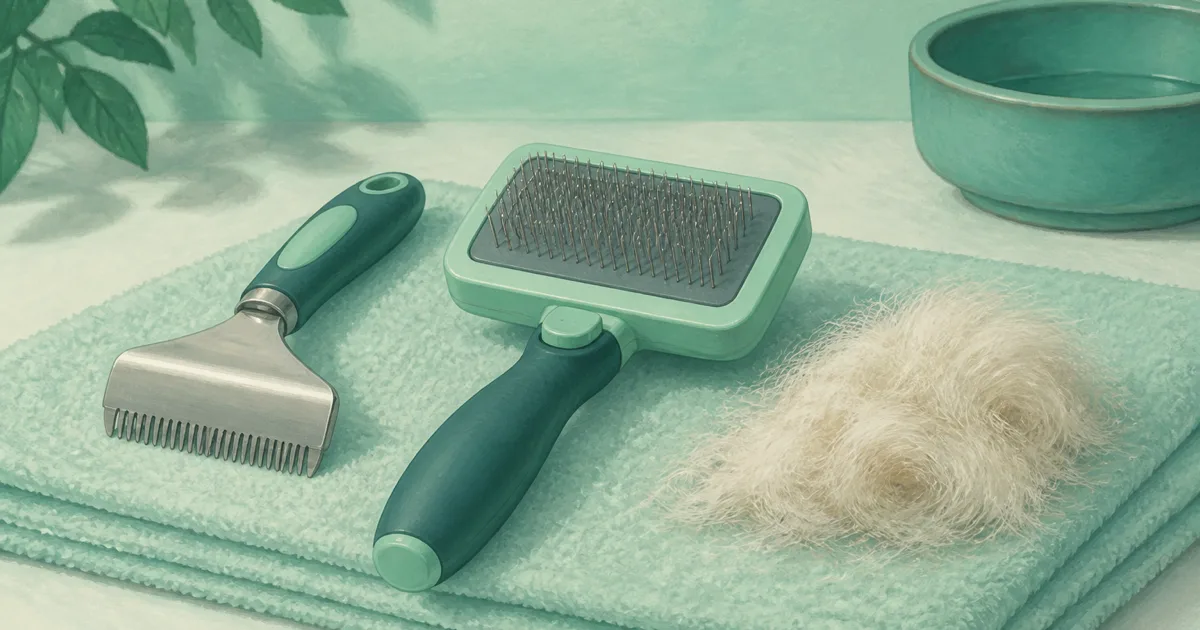
The short answer: If you want the best deshedding brush for dogs with a thick double coat, buy the FURminator Dog DeShedding Tool, Grooming Tool For Dogs, Large, Long Hair. If you mainly need a daily surface brush, buy the Hertzko Self Cleaning Slicker Brush for Dogs and Cats. Do not use an undercoat blade on a curly or single coat.
Our picks
Shedding tools get sold like one gadget will empty the couch. Coat type decides the tool. This comparison covers the best deshedding brush for dogs as an undercoat edge versus a slicker, using live US Amazon listings rated 4.0 or higher. It is research-based from specs and owner reviews, not a grooming-salon trial of every breed.
If hair on the floor is the main complaint, pair brushing with best robot vacuum for pet hair. For a quieter session with suction at the brush, see how to use a pet grooming vacuum.
Undercoat blade vs slicker
A deshedding edge reaches through the topcoat and collects hair that is already detached. A slicker works the surface and small mats. Using the wrong one either does nothing or scrapes skin.
Undercoat pick: FURminator large long hair
The FURminator Dog DeShedding Tool, Grooming Tool For Dogs, Large, Long Hair is the best deshedding brush for dogs when the coat is a true double coat and the dog is in the large, long-hair size band. Owners with goldens and shepherds describe bags of undercoat, which is the point. The ejector button is the feature you will use every session.
Use it on a completely dry dog. Work with the coat, not against it. Ten minutes is plenty. If the skin looks pink, you are done for the day.
This listing is the large long-hair version. A 20-pound terrier needs a smaller edge. A short-coated lab still sheds, but the short-hair FURminator variant fits better than this long-hair edge.
Skip it for doodles, poodles, and most terriers with wiry single coats. Those dogs need a slicker and a comb.
Slicker pick: Hertzko self-cleaning
The Hertzko Self Cleaning Slicker Brush for Dogs and Cats is the comparison pick when you want a daily brush, not an undercoat harvest. The pins retract so you are not picking fur out with your fingers. The review volume is huge because this is the household default brush, not a specialty rake.
It will not replace a deshedding edge on a husky in April. It will keep a lab’s topcoat neater between deeper sessions, and it is the safer starting tool if you are not sure what coat you have.
Use light pressure. Slicker pins can scratch if you lean on them. Stop at the first tangle you cannot tease out, and switch to a comb instead of ripping.
How to run a session that does not suck
- Brush outside or on a towel you can shake into the trash.
- Confirm the coat is dry.
- Start at the shoulder and back, not the belly.
- Keep the wrist loose. You are collecting hair, not scraping a grill.
- Stop while the dog is still willing. Tomorrow exists.
If your dog hates the sound of the ejector button, step away to clear the tool. A grooming vacuum hose can catch flying fur, but the brush still does the coat work.
Keep a lint roller or a dedicated grooming towel at the door so you are not walking undercoat into the car. If you brush inside, close the bedroom doors. Undercoat travels.
For dogs that fidget, work in two rooms: five minutes, a break, five minutes. You still get the pile of hair. You skip the fight.
Coat types in plain English
Double coat. Dense undercoat plus guard hairs. Seasonal dumps. FURminator-style edge, then a slicker to finish.
Short single coat. Surface hair, less “cloud.” Hertzko-style slicker or a rubber curry. An undercoat blade is usually overkill.
Curly / hair coat. Mats form. Slicker and comb. No undercoat blade.
Long silky coat. Slicker plus a pin brush. Deshedding edges can cut those coats.
When in doubt, start with the slicker. You can buy the undercoat tool later. You cannot un-shred a doodle coat.
Senior dogs and thin-skinned breeds need even less pressure. If you see dandruff or hot spots, stop using any blade and ask a vet or groomer before you keep raking. A deshedding tool is for loose hair, not for hiding a skin problem.
If you already run a robot vacuum, empty it on the same day you deshed. The brush moves a week of hair at once. The robot will choke if you ignore the bin.
Bottom line
The best deshedding brush for dogs is the FURminator large long-hair tool if you have a large double-coated dog and you are tired of undercoat on every chair. The Hertzko slicker is the better daily brush for everyone else, including mixed coats you have not identified yet. Match the tool to the coat, keep sessions short, and let a robot vacuum handle what still hits the floor.
Frequently Asked Questions
What is the best deshedding brush for dogs with a double coat?
The FURminator Dog DeShedding Tool, Grooming Tool For Dogs, Large, Long Hair is the default for large, long-haired double coats. Size the edge to your dog. The Hertzko Self Cleaning Slicker Brush for Dogs and Cats is the better daily brush for surface hair.
How often should I deshed?
Once or twice a week in heavy shed, for 10 to 15 minutes, on a dry coat. Daily undercoat raking can irritate skin. A slicker can be used more often with a light hand.
Can I use a deshedding tool on a wet dog?
No. Wet hair grabs and pulls. Dry the coat first. After a bath, wait until the coat is fully dry.
Will this stop shedding completely?
No. You are removing hair that was already going to fall out. Floors still need a robot vacuum for pet hair. The brush just moves that hair into the trash instead of the couch.
Is a deshedding tool safe for doodles?
Usually no. Curly and hair-type coats need a slicker and comb, not an undercoat blade. Using a FURminator-style edge on a doodle can wreck the coat.
What size FURminator do I buy?
Match the listing to weight and coat length. This large long-hair tool is for bigger dogs with coats longer than about two inches. Medium and short-hair versions exist on Amazon if that does not fit.
How do I know I am pressing too hard?
Red skin, a yelp, or a bald-looking patch means stop. The edge should glide. You should see a pile of loose undercoat, not cut topcoat.
Do I still need a grooming vacuum?
Optional. A hand tool is the deshedding job. A pet grooming vacuum is for catching fur as you brush, not a replacement for the right brush.