How to Choose a Dog Ramp for a Bed
A dog ramp should be wide, stable, and shallow enough for your dog to use without jumping off the side when nobody is watching.
By Nate Brooks
Pawsidepicks is reader-supported. As an Amazon Associate we earn from qualifying purchases. Learn more.
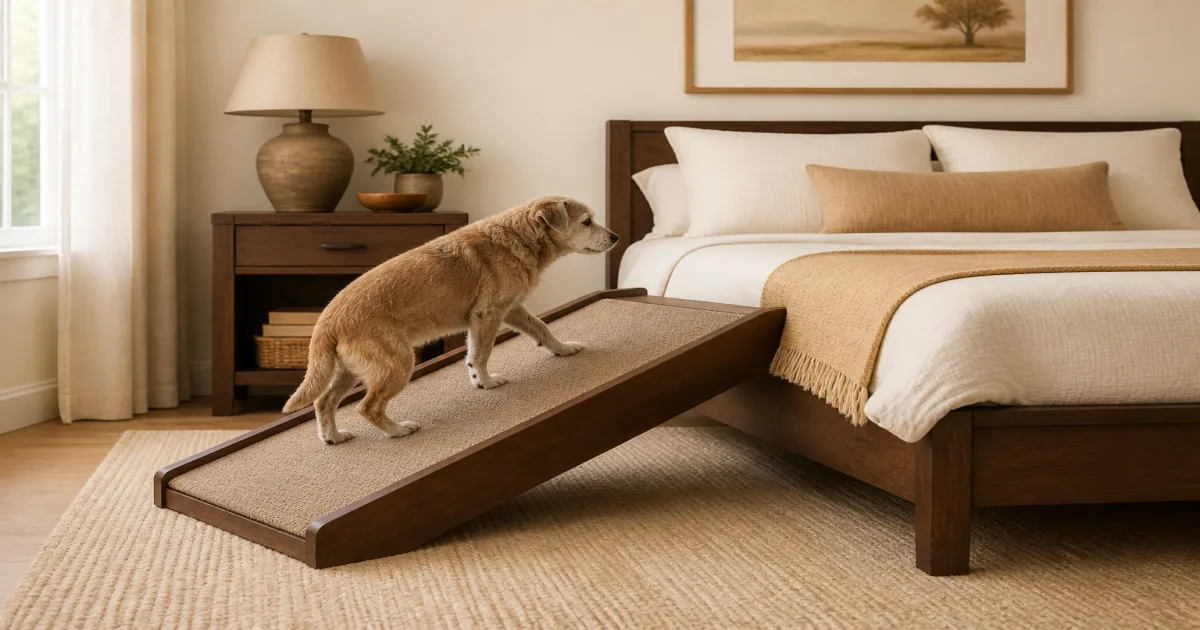
The short answer: Choose a dog ramp for your bed by measuring the bed height first. Then look for a long, stable ramp with a grippy walking surface and enough width for your dog to turn around comfortably.
Our picks
A dog ramp can make bedtime easier for a small dog, a senior dog, or a dog recovering from an injury. It is not automatically safer just because it has the word “ramp” in the listing. A steep, narrow board can be harder to use than the jump you were trying to avoid.
We checked the live US Amazon listing and owner feedback for the Dog Ramp for Bed, 5-Height Adjustable Folding Ramp. It showed 5.0 stars from 752 ratings during our review. That review history clears our quality gate, but measure your furniture and your dog before buying any model.
Measure the bed and the space beside it
Measure from the floor to the top surface your dog needs to reach. If your mattress is 28 inches high, the ramp needs to meet that height without leaving a gap.
Also measure the clear floor area. A longer ramp creates a gentler slope, but it needs room. Do not buy a ramp that blocks a bedroom door or forces you to step over it every morning.
Check where the bottom will rest. Smooth hardwood can let a ramp slide. A rug, non-slip pad, or rubber feet make a big difference.
A shallow slope matters more than a fancy finish
Steep ramps make a dog hesitate, especially if they have short legs or sore joints. Look at the ramp length in addition to the maximum height. The same 28-inch bed is much easier to reach on a long ramp than on a short one.
The walking surface should have real grip. Carpet, textured fabric, or a secure rubberized tread is better than polished wood. Press your palm onto the surface. If it feels slick to you in socks, it will not inspire confidence in a dog.
Avoid loose carpet edges. Nails can catch on them, and a flap can make a dog jump sideways.
Check width, weight limit, and wobble
Your dog should be able to place both front paws comfortably without balancing on the edge. A ramp for a Chihuahua may be too narrow for a stocky terrier or a large senior dog, even if the listed weight limit looks generous.
Set the ramp up at the intended height, then press down gently at the center and sides. It should not rock, shift, or fold unexpectedly. Lock every adjustment before your dog tries it.
For a dog that is still strong but reluctant to jump, a wide ramp can be more useful than a soft orthopedic dog bed alone. The bed helps resting comfort. The ramp handles the climb.
Teach the ramp at its lowest setting
Put the ramp at its shallowest angle. Place treats on the surface and let your dog investigate. Reward one paw, then two paws, then a few steps. Keep the first sessions short.
Do not pull your dog up by their collar or carry them halfway up and expect them to finish. That can make the ramp feel unstable. If your dog will not step on it, lay it flat on the floor for a day or two so it becomes familiar.
Once your dog walks the full length easily, raise the height a little. Use the same cue each time, such as “up” or “bed.” Praise at the top, then practice the descent too. Going down is often the harder part.
Know when a ramp is not enough
A new refusal to jump can be a sign of pain, not laziness. Contact a veterinarian if you notice limping, yelping, stiffness after rest, or trouble climbing even a gentle slope.
Do not use a ramp as a workaround for a dog who slides, falls, or panics on it. Get professional advice on the right height and setup. A ramp should reduce strain, not create a daily obstacle course.
If the bed is very high, consider lowering the mattress or using a floor-level dog bed instead. A stable, easy option used every day is better than a tall ramp nobody trusts.
Bottom line
The best dog ramp for a bed is long enough to keep the slope reasonable, wide enough for your dog, and secure on your floor. The Dog Ramp for Bed, 5-Height Adjustable Folding Ramp is a research-based pick for adjustable setups, but the measurements in your room decide whether it is actually a fit.
Frequently Asked Questions
Is a ramp better than stairs for a dog?
A ramp is usually easier on a dog that has trouble lifting each leg, but only if the slope is gentle and the surface has good grip.
How long should a dog ramp be for a bed?
Longer is generally easier because it creates a shallower slope. Measure your bed height and avoid a short, steep ramp.
Can large dogs use a dog ramp?
Yes, if the ramp is rated for their weight, wide enough for their stance, and stable when they walk on it.
How do I teach a dog to use a ramp?
Start at the lowest height, use treats, and let your dog move at their own pace. Never pull them up by the collar.
Should a dog ramp have side rails?
Side rails can help a timid dog stay centered, but the ramp still needs enough width and a non-slip surface.
When should I ask a vet about my dog's jumping?
Ask when a new reluctance to jump, limping, stiffness, or yelping appears. A ramp helps with access but does not diagnose pain.