How to Use a Dog Nail Grinder Without Stressing Your Dog
A nail grinder can make trims less abrupt than clippers, but only when you work in short sessions and take off a little at a time.
By Nate Brooks
Pawsidepicks is reader-supported. As an Amazon Associate we earn from qualifying purchases. Learn more.
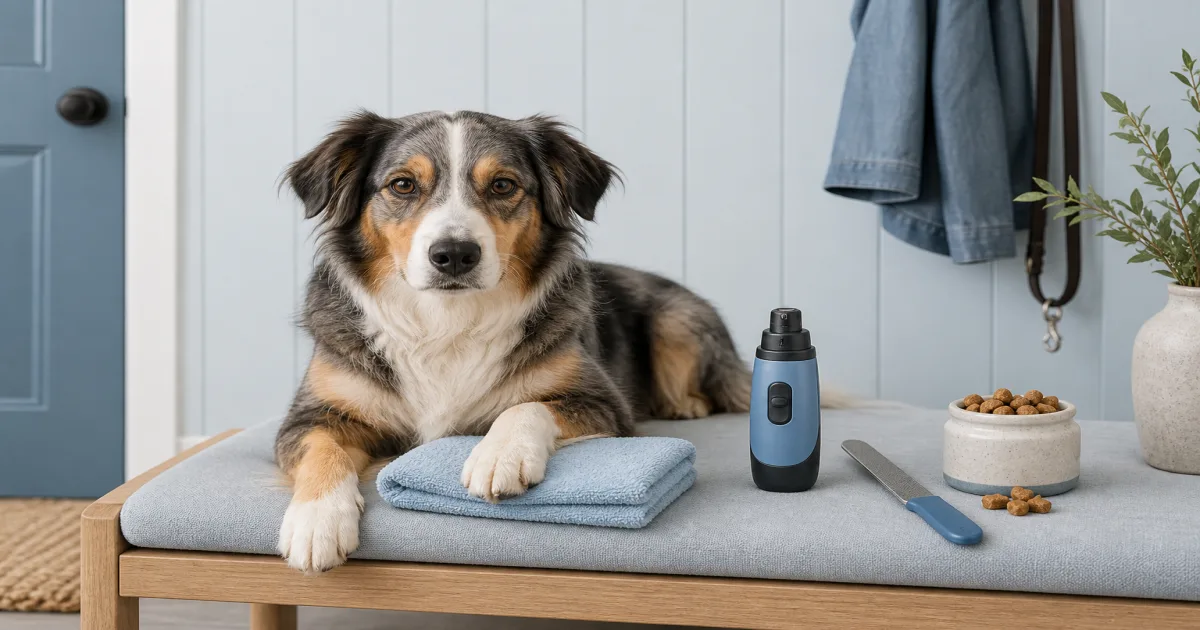
The short answer: A dog nail grinder works best when you introduce the sound before you touch a paw, then make quick, light passes from the nail tip. Stop often to look. One calm paw is better than a full trim that makes next month harder.
Our picks
A grinder is useful for rounding sharp nail tips and taking off a little length without a single hard clip. It is not a shortcut for a dog that is scared of having their feet handled. The calm part comes first.
We checked the live US Amazon listing and owner feedback for the Casfuy Dog Nail Grinder Upgraded. It showed 4.3 stars from 9,846 ratings during our review. We have not tested it ourselves. The product is a reasonable starting point because it has two speeds, a small-pet guard, and plenty of long-term notes about noise, battery life, and the learning curve.
Start with paw handling, not the motor
Pick a time when your dog is already relaxed. Sit on the floor or beside them rather than pulling a paw across the room. Touch a shoulder, then a leg, then a paw. Give a treat after each calm step.
If your dog pulls away, do not trap the paw. Let go, reset, and make the next attempt easier. A dog that learns you will release their foot is more likely to offer it again.
For the first session, put the grinder on the floor with the power off. Reward your dog for sniffing it. On the next session, turn it on several feet away, reward, then turn it off. The goal is boring familiarity, not bravery.
Choose a position you can keep steady
Small dogs may be comfortable on a towel in your lap. Larger dogs often do better standing on a non-slip rug while you sit beside them. Avoid a slick kitchen floor where they feel unsteady.
Hold one toe gently but firmly enough that the nail does not bounce. Keep fur away from the rotating tip. If your dog has long hair between the toes, use your fingers to pull it back before you turn the tool on.
Do not try to grind all four feet during the first successful session. A few nails, a treat, and a break teaches your dog that the job ends before it becomes exhausting.
Use short passes from the tip
Turn the grinder on before it touches the nail. Touch the tip for one or two seconds, lift it away, and check your work. Repeated short touches prevent heat buildup.
Start at the very end of the nail. You can remove more next time. On pale nails, the quick is easier to see as a pink center. On dark nails, look for a darker or moist-looking center as you work. That is your signal to stop.
Aim to keep the nail clear of the floor when your dog stands. The goal is not to make every nail tiny. Overly short nails are painful, and a dog remembers a bad trim.
Keep black nails especially conservative
Black nails hide the quick. Use strong overhead light and remove only a thin layer at a time. After each pass, look at the cut surface. When a small dark dot appears in the center, it is time to leave that nail alone.
Some dogs have a mix of pale and dark nails. Use a pale nail as a rough guide to how much length is safe, but do not assume every toe has the same quick length.
If you are unsure, ask a groomer or veterinarian to show you once. That is cheaper and kinder than guessing until someone bleeds.
Take breaks before your dog asks for one
Watch for lip licking, repeated head turns, a stiff body, or a paw that keeps disappearing. Those are useful signals, not stubbornness. Turn the grinder off, give your dog space, and come back another day.
A short session twice a week can be easier than a big monthly event. Regular tiny trims can also encourage the quick to recede gradually, which makes maintenance easier over time.
Keep a little styptic powder or cornstarch nearby in case you nick a nail. Apply gentle pressure. If bleeding does not stop promptly or your dog seems very painful, call your veterinarian.
Finish by smoothing the sharp edge
After you remove a little length, angle the grinder around the edge for a second or two. This takes off the hook that catches on blankets and scratches floors. Do not hold the grinder against one spot until it feels perfectly polished. Heat builds fast.
Check dewclaws too. They do not wear down on walks and can curl into the skin if they are forgotten.
For calm handling practice between trims, use ordinary low-pressure routines. Ask for a paw while your dog rests in their crate, touch the toe, reward, and move on. The point is to make feet boring.
When to skip the home trim
Do not force a dog that is panicking, snapping, or struggling hard enough to injure either of you. A professional groomer may have a better setup, and a veterinarian can help if pain or anxiety is involved.
Also pause if you see a cracked nail, swelling, limping, or a nail growing into the pad. A grinder is for routine maintenance, not treatment.
Bottom line
Use a dog nail grinder in short, quiet sessions. Let your dog get used to the tool, hold one toe at a time, and make one- or two-second passes from the tip. The Casfuy Dog Nail Grinder Upgraded is a sensible research-based pick if you want two speeds and a guarded port, but the slow introduction matters more than the brand.
Frequently Asked Questions
Is a nail grinder better than clippers for dogs?
A grinder removes small amounts gradually, which can feel less abrupt for some dogs. It still needs careful handling and breaks so the nail does not get warm.
How often should I grind my dog's nails?
Most dogs need a check every two to four weeks. Active dogs may wear nails down faster, while indoor dogs often need more frequent short trims.
How do I avoid the quick with a nail grinder?
Take brief passes from the tip, look at the nail after each pass, and stop before the darker center becomes large or shiny.
Can I use a nail grinder on black nails?
Yes. Work more slowly because the quick is harder to see. Trim tiny amounts, use good light, and stop when the center of the cut surface changes.
Why does my dog pull away from the grinder?
The sound, vibration, or being asked to hold still can all be unsettling. Start with the tool switched off, reward calm behavior, and build up over several sessions.
Can a nail grinder hurt a dog?
It can nick the quick or warm a nail if you hold it in one place too long. Use short touches and stop if your dog becomes distressed.